What Suits a Printed Run
3D printing is at its best for short and medium runs rather than mass-market volumes. There are no moulds or tooling to pay for, and a design can change between batches without starting over. The kinds of jobs that fit well:
- Branded and promotional pieces - keychains, giveaways, display props and signage for stalls, markets and events, with your colours printed into the plastic.
- Small-batch product parts - enclosures, clips, mounts and accessories for a product that isn't selling in injection-moulding volumes yet.
- Replacement parts in quantity - the same broken clip or bracket across a whole site, fleet or fit-out. Our replacement parts guide covers what prints well.
- Jigs, fixtures and workshop aids - simple tools made to fit your exact process.
- Prototypes before a production run - test the fit and feel in plastic before you commit to tooling.
Colour and Materials
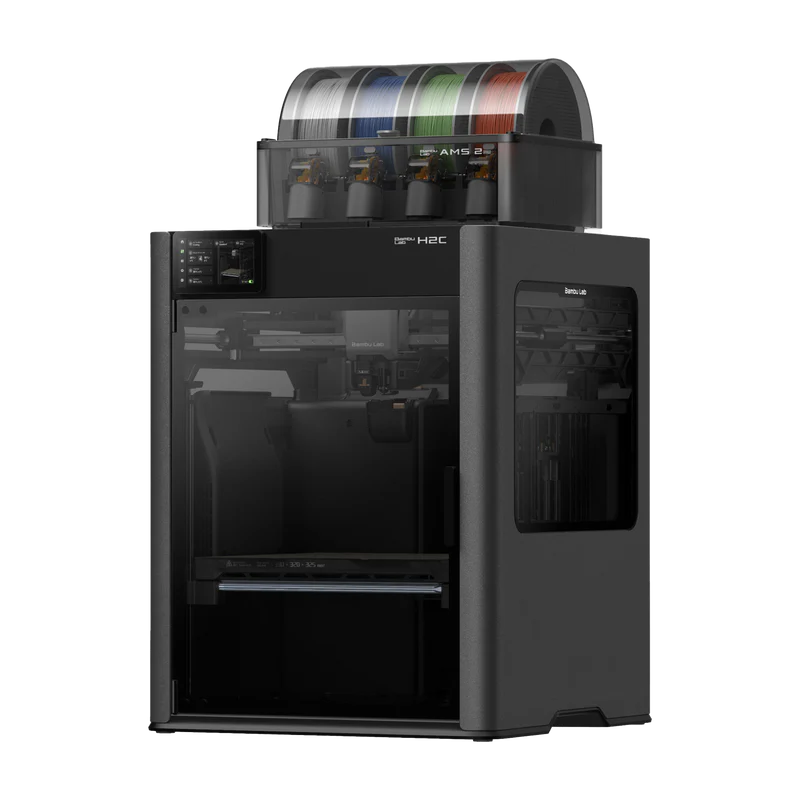
Most of our prints are made on a Bambu Lab H2C with a multi-colour AMS, which can put up to 8 colours in a single print. For branded work that means a logo or colour scheme is part of the plastic itself, so it won't chip or peel the way a printed or painted finish can.
For functional parts, the run is printed in the material the job needs: PLA for display and promotional pieces, PETG for everyday handled parts, ABS or ASA for heat and outdoor use, TPU for flexible parts, and polycarbonate where strength and heat resistance matter most. The materials guide explains the trade-offs, but you don't need to choose. Tell us how the part is used and we'll recommend one.
How Bulk Pricing Works
Bulk work is priced per piece and quoted free before anything is printed. As our cost guide explains, print time is the biggest factor, and repeat pieces cost less each than a one-off because the setup and any design work are shared across the batch. If a part has to clip, thread or slide into something, a small test print first is usually the cheapest way to make sure the whole run fits. Samples are available on request and charged at our standard custom print rate.
When Printing Isn't the Right Tool
We'd rather say this up front: for very large runs of identical parts, injection moulding usually becomes cheaper per piece once the tooling is paid off. If your job is heading that way, we'll tell you honestly, and printing can still be useful for the prototypes and early batches that come before it.
What to Send for a Quote
- Quantity, and whether it's a one-off run or something you'll reorder.
- A file or a brief - STL, 3MF, OBJ or STEP is ideal, or photos, sketches and measurements if you don't have a model yet. Our STL preparation guide helps here.
- How the part is used - indoors or out, handled or displayed, near heat or not.
- Colours, including any brand colours you need matched.
- Your deadline and delivery location. Lead times for business runs start from one week, and we ship Australia-wide and internationally. How long 3D printing takes explains what affects the timing.
You deal directly with Kevin, who runs the workshop, so questions get a straight answer from the person doing the printing.
Planning a run?
See how business orders work, then send the quantity, file or brief and deadline for a free per-piece quote.
Business 3D PrintingReady to ask now? Use the business enquiry form, or read about how we recycle our PLA waste with Infilament.