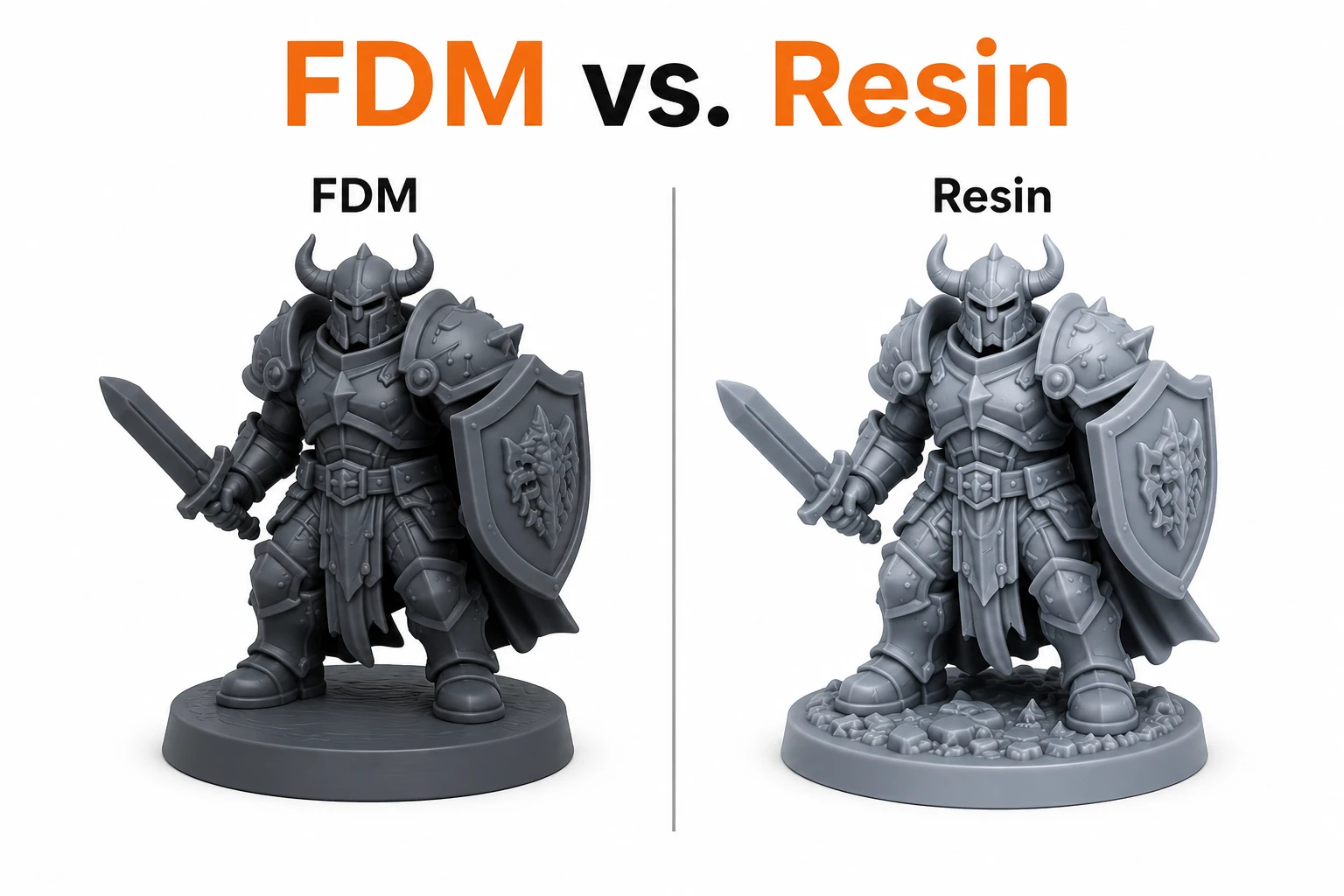
The Two Technologies, in One Minute
FDM (fused deposition modelling) is what we run: a precise hot nozzle draws the part in melted plastic, layer by layer, in real engineering materials like PLA, PETG and ABS. It makes tough, full-size, everyday-durable parts - and on our multi-colour setup, the colours are printed into the plastic itself.
Resin (SLA/MSLA) printers cure liquid resin with UV light. They capture astonishingly fine detail at small scale - but the parts come out of a liquid bath needing gloves, washing and UV curing, they're usually a single colour, more brittle, and the build areas are small.
Neither is "better". They're different tools, and knowing which one your idea needs is most of the battle.
What FDM Does Brilliantly
Parts that get used. Keychains that live on keys, fidgets that get pressed ten thousand times, replacement clips and brackets that have to take real load. FDM plastics flex before they break; resin tends to snap.
Colour without paint. Up to 8 colours swapped mid-print means a display piece like an Eeveelution Pokeball display comes off the printer finished - no painting, nothing to chip or peel. Resin prints are one colour until someone paints them. This is FDM's party trick, and it's the heart of most of what we make.
Size. Display sets, cosplay props, signage pieces and organisers that would take a resin printer several runs (or simply not fit) print in one go.
Material choice. Tough PETG for outdoor clips, flexible TPU, heat-tolerant ABS or ASA - a whole menu of engineering plastics, matched to the job.
When a Job Is Genuinely a Resin Job
We'd rather tell you this up front than deliver something disappointing:
- Small-scale miniatures with fine faces - 28-32mm tabletop gaming figures where eyes, teeth and chainmail matter. At that scale FDM layer lines blur the detail that makes a mini a mini.
- Jewellery and casting masters - pieces that need a glass-smooth surface straight off the printer.
- Very fine features - raised text under about a millimetre, thin lattice, wisps and threads. If the wow of your idea lives in features finer than a nozzle's width (about 0.4mm), that's resin territory.
We currently print FDM only, so for jobs like these we'll say "this one wants a resin printer" rather than quote you something that won't do the idea justice.
The Grey Zone (Where People Guess Wrong)
Plenty of ideas that sound like resin jobs are actually great FDM prints. Display figures from about 10cm up hold their detail beautifully - the collector display pieces in our shop are exactly this. Cosplay props, terrain, cake toppers, trophies, phone stands, desk pieces: at hand scale and above, modern FDM with a fine nozzle and matte filament (which hides layer lines remarkably well) gets a finish most people can't tell from injection moulding at arm's length.
The honest test is scale and feature size, not category. A dragon the size of your palm? FDM, happily. The same dragon shrunk to a chess piece with individually visible scales? Resin.
What This Means for Your Quote
When you send us an idea, part of what you're getting is this call made honestly. If it's a great FDM job - most are - we'll quote it with material and colour recommendations, the same no-surprise process as always. If it's truly a resin job, we'll tell you exactly that and why, so you can find the right service for it instead of paying for a compromise.
And if we ever add resin to the workshop, this page will be the first to say so.
Not sure which side your idea lands on?
Describe it - size, detail, what it needs to survive - and we'll tell you straight whether it's one for us.
Get in TouchWant the deeper dive on materials? Read the full materials guide, or see what multi-colour FDM looks like in practice in the gallery.