The Print
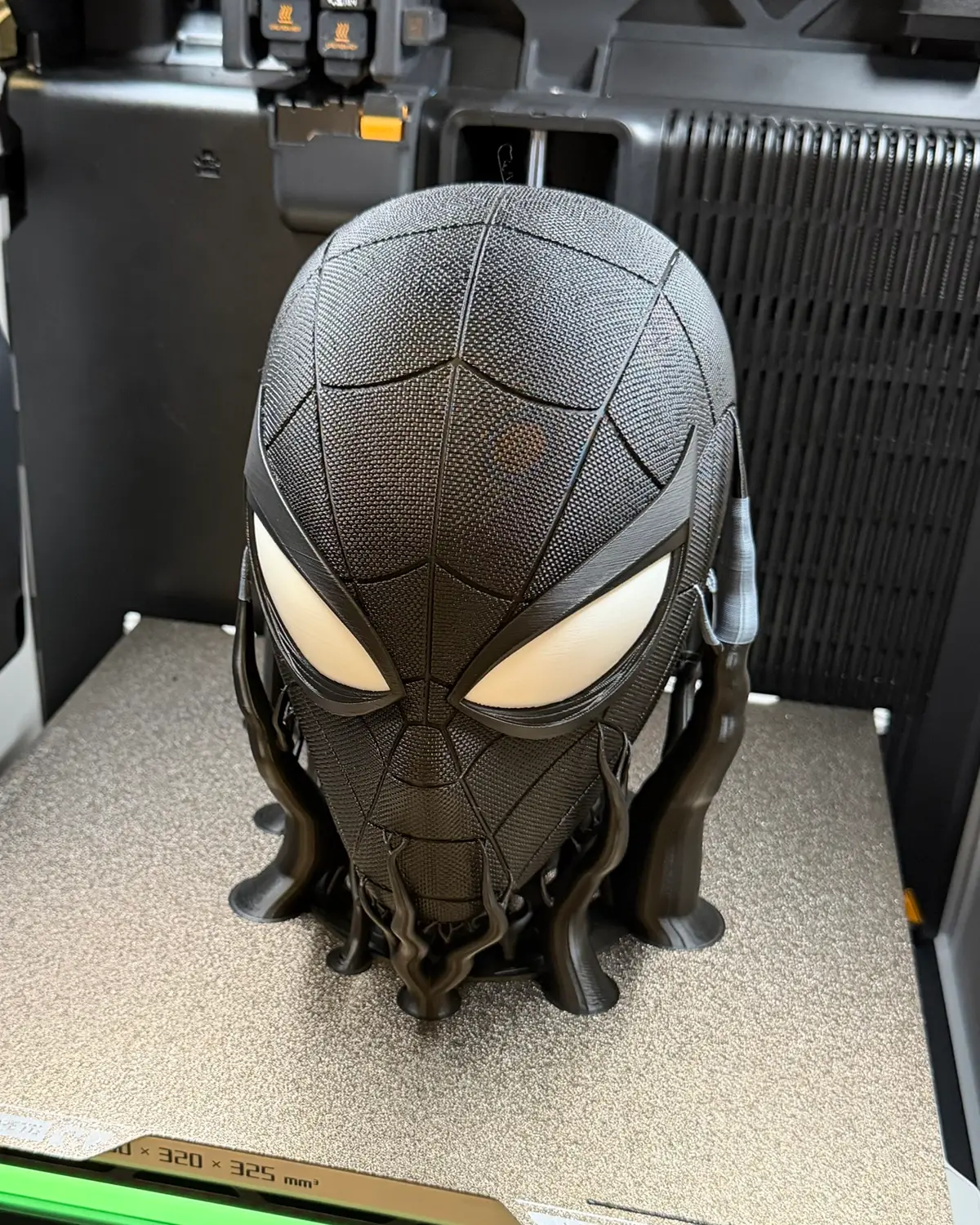
This stand was printed for a project in PLA on a Bambu Lab H2D, and it spent about a day on the printer. It's a display piece with a job to do: the head sits on a desk and a pair of headphones hangs over the top of it.
Pieces like this sit somewhere between a prop and a desk accessory, and they have the same things in common as most large display prints: they're big, curved and detailed, which is exactly where a 3D printer has to work hardest.
Why a Print Like This Needs Supports
An FDM printer builds a piece one thin layer at a time from the bottom up, and each layer needs something underneath it. A head shape is full of overhangs: the brow, the chin and the curve under the jaw all hang out over empty space. Without support, those layers would droop or fail.
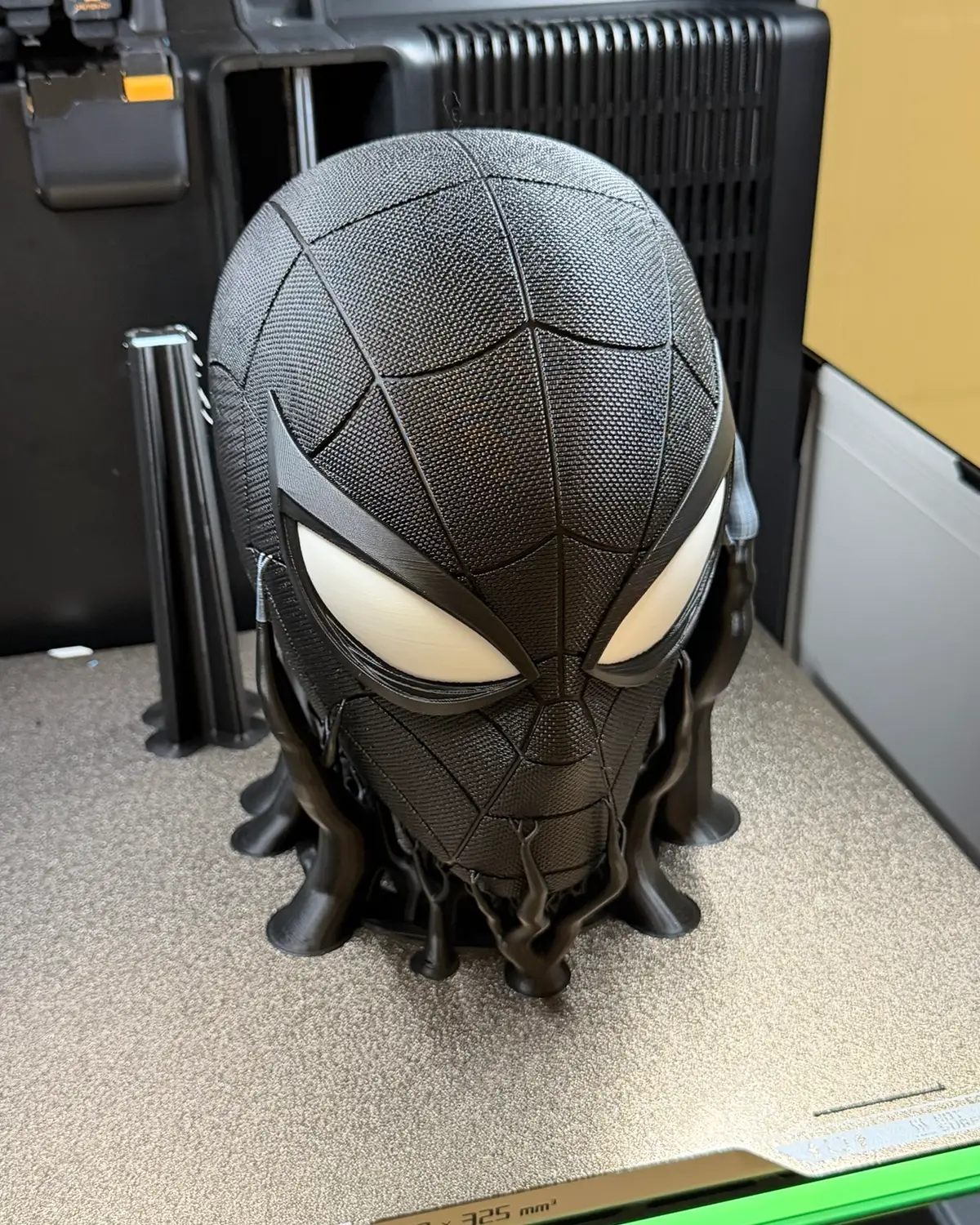
The branching structures in these photos are tree supports. Instead of filling the space under the model with a solid block, they grow up from the build plate like branches and only touch the model where it needs holding up. That uses less material, and because there are fewer contact points, they come away more cleanly and leave less to tidy up afterwards.
The Detail Is Printed In
Look closely and you'll see the woven texture of the suit across the whole head, with the raised web lines running over it. None of that has been painted or added afterwards: the photos were taken straight off the printer, so every bit of that texture came out of the machine. Fine surface detail like this is one of the reasons large FDM prints can look so good at arm's length. Our FDM vs resin guide goes into where FDM detail shines and where resin is the better tool.
Why a Day on the Printer
A print this size is built up from a great many thin layers, and every one of them has to trace the outer surface, the web lines and the supports. That adds up, which is why a large display piece is usually measured in hours or days rather than minutes. Our turnaround guide explains what sets print time.
After It Comes Off the Plate
A photo like this is the halfway point, not the finish. The supports are removed by hand and the spots where they touched the model are cleaned up before the stand goes anywhere near a desk.
Planning a Large Display Print
A few things are worth sorting out before a big piece is printed:
- Size. Anything bigger than the printer's build area is split into parts that join together afterwards. If the piece has to hold or fit something, like a pair of headphones, tell us the measurements.
- Material. PLA prints crisp detail and a lovely matte finish, which suits display work like this stand. For a piece that will be handled a lot or spend time somewhere warm, PETG copes better. Our PLA vs PETG guide compares the two.
- Heat. A PLA piece left on a sunny windowsill or in a hot car in an Adelaide summer can soften and warp. Our care guide covers how to look after a display piece.
- Cost. Print time is the biggest part of the price, so a piece that runs for a day costs more than a quick one. Our cost guide explains how that works.
A Note on Characters
Spider-Man is a Marvel character, and characters from films, games and comics belong to the companies that own them. This stand was printed for a project and isn't available in our shop. If you have a display piece in mind, the best starting point is a file you've designed yourself or a model you have the rights to use, and we're happy to talk through what's possible.
Got a display piece in mind?
Send us your file or your idea, plus the size you're after, and we'll come back with a free quote.
Custom PrintingSending a file? Our guide to preparing STL files covers scale, wall thickness and what to send. Wondering what happens to printing waste? Our PLA offcuts and supports go to Infilament to be made into new filament.